The Minority in Parliament has criticised a recent High Court ruling that ordered the Attorney-General to step in and take control of all criminal cases being handled by the Office of the Special Prosecutor (OSP).
They believe the decision is based on a wrong interpretation of the law.
In their view, Article 88(4) of the Constitution already gives the OSP full authority to prosecute cases. They argue that this power does not require repeated approval from the Attorney-General each time the office wants to act.
The controversy began after the High Court in Accra issued its ruling on Wednesday, April 15. The court instructed the Attorney-General to assume responsibility for all ongoing OSP prosecutions until proper approval is secured.
It also cancelled those cases, bringing several legal proceedings to a sudden stop.
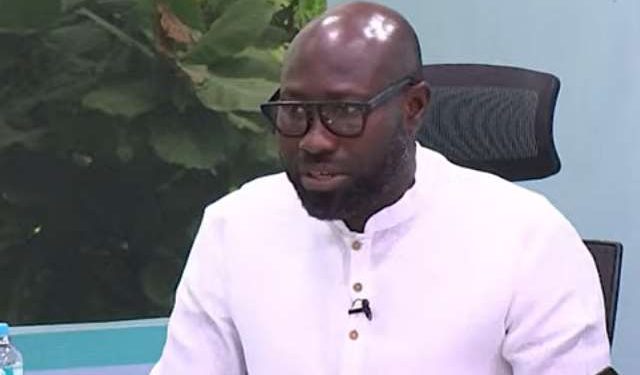
Speaking on Thursday, April 16, the Minority’s Legal Counsel and Member of Parliament for Suame, John Darko, openly disagreed with the court’s decision. He called it a “complete mistake.”
“If anybody interprets Section 4 of the OSP Act to mean that any time we want to bring a prosecution, a suit against anybody, a criminal suit against anybody, any time we want to prosecute an accused person, we need to go to the Attorney-General’s office for clearance, you’ll be mistaken.”
He stressed that such a requirement would make the OSP ineffective. According to him, forcing the office to seek approval for every case would place it under the control of the executive, which defeats its purpose.
“Because then there was no need to set up the office for it to be controlled by the executive. If the person needs the AG’s authorisation at every turn, every day to bring cases, then it’s just like another appendage of the executive and comes under the control of the executive.”
John Darko also criticised the judge’s decision to cancel all ongoing prosecutions. He insisted that the judge overstepped his authority.
“The judge, again, was wrong. He cannot declare all the cases as null and void. He has no such power. He has no power to do that. This judge cannot declare all the cases as null and void. He’s completely wrong. He doesn’t have that power. The only court that has that power would be the Supreme Court.”
He then called on the Attorney-General’s office to prove its commitment to fighting corruption by allowing the OSP to continue handling its cases without interference.
The Minority further questioned the speed at which the Attorney-General moved to take over the prosecutions. They see this action as a sign that the government may not be fully committed to tackling corruption.
John Darko ended by criticising the government’s legal approach toward the OSP. He described it as troubling and said it goes against efforts to build strong and independent anti-corruption institutions.