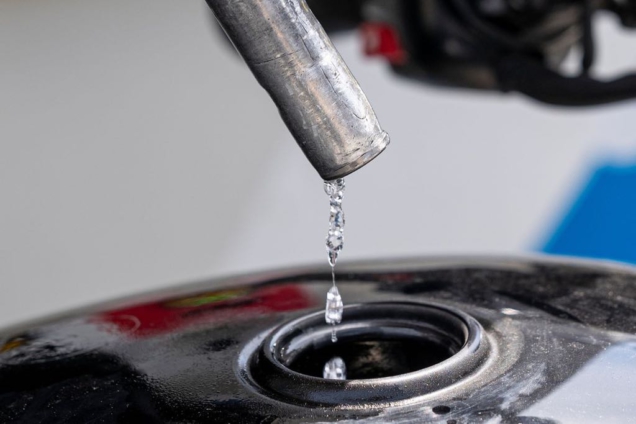
The Chamber of Oil Marketing Companies (COMAC) has raised concerns over the government’s fuel price intervention, warning that the policy could place significant financial strain on industry players.
Chief Executive Officer of COMAC, Dr. Riverson Oppong, speaking in an interview said the reduction in fuel prices announced by government comes at a cost to oil marketing companies (OMCs), particularly through cuts to key operational margins.
His comments follow the government’s decision to absorb GH¢2.00 per litre on diesel and GH¢0.36 per litre on petrol as a temporary relief measure to ease the burden on consumers.
According to Dr. Oppong, the intervention involves reducing margins that are critical to the operations of companies within the sector.
“Government has intervened. This one you cannot take the credit. The government has slashed margins meant for operational expenditure,” he said.
He explained that the cuts affect key components such as freight margins under the Price Differential Margin (PDM) and the Unified Petroleum Pricing Fund (UPPF), as well as revenues used by institutions for internally generated funds and fuel marking activities.
Dr. Oppong warned that reducing funding for fuel marking could undermine efforts to prevent fuel adulteration and diversion, especially if the National Petroleum Authority lacks sufficient reserves to sustain the programme.
He further highlighted the financial burden placed on OMCs under the diesel price reduction policy, noting that companies are required to pre-finance part of the cost.
“If any OMC today sells 10 million litres of diesel within four weeks, what it means is that this OMC needs to pre-finance GH¢6.3 million in order to be able to buy and sell and wait on NPA to pay the OMC from UPPF,” he explained.
He cautioned that delays in reimbursement could create liquidity challenges for OMCs, affecting their working capital and day-to-day operations.
Dr. Oppong said such risks could ultimately impact the stability of the fuel market, warning that the current arrangement places an indirect burden on oil marketing companies.
“If these funds delay, that brings risk to the market. So indirectly we are burdening the OMC,” he added.
Government has indicated that the intervention will last for one month, during which it will monitor global oil price trends and determine whether further measures are needed.