
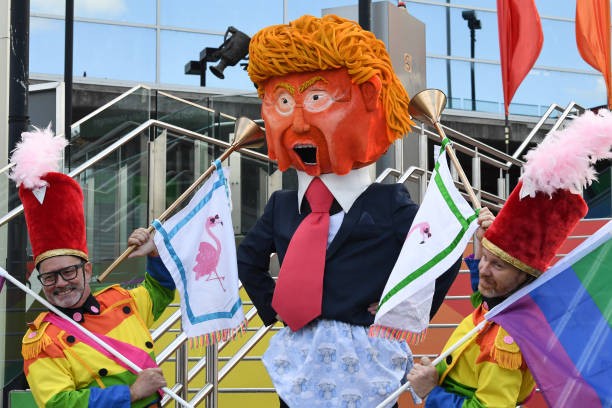
When satire becomes a handcuff offence, a nation must ask itself, “Are we protecting leadership or silencing truth?”
The arrest and remand of individuals accused of digitally manipulating images of public officials has ignited a national conversation that Ghana can no longer avoid. At the centre of the storm lies a difficult but necessary question: in a democratic society, should satire be punished or protected?
For many Ghanaians, the issue is not simply about one controversial image. It is about the boundaries of freedom itself. Since the repeal of the Criminal Libel Law in 2001, Ghana has been widely praised as a beacon of press freedom in Africa. The repeal marked a historic shift, signalling that citizens could criticise, question, and even satirise those in power without fear of imprisonment. It was a bold declaration that democracy thrives not on silence, but on scrutiny.
Yet today, that principle appears to be under strain.
The specific case of Baba Amando has intensified the debate. His alleged creation of a cartoon portraying the President of Ghana with lipstick symbolically suggesting homosexuality has drawn sharp public reaction. Even more controversial is the reported reproduction of an image of Government Communications Minister Felix Kwakye Ofosu in LGBTQI+ colours, interpreted by some as a direct provocation.
Supporters of the arrests argue that such portrayals cross a moral and cultural boundary. In a society where cultural and religious values strongly shape public opinion, they insist that freedom of expression must come with responsibility. To them, this is not satire; it is disrespect, misrepresentation, and a potential source of social tension. They believe the law must act decisively to prevent what they see as deliberate attempts to undermine dignity and public order.
But critics see something far more troubling.
They argue that criminalising satire, even when offensive, sets a dangerous precedent. Political cartoons, exaggerations, and symbolic imagery are not new. They are part of a long global tradition of holding power accountable. Satire is meant to provoke, to challenge, and sometimes to offend. It is not designed to comfort; it is designed to question.
Ghana’s own legal history offers an important perspective. In past defamation disputes involving media houses and cartoonists, courts have often leaned toward protecting freedom of expression, particularly when public figures are involved. The underlying principle is simple: leadership comes with scrutiny. Those who hold power must be prepared not only for praise, but for criticism and, at times, ridicule.
This aligns with broader democratic practice. In countries like the United States and Canada, public officials are frequently depicted in exaggerated, humorous, or even harsh ways. Political satire thrives in newspapers, television, and social media. Rarely do such expressions lead to arrests, because they are understood as part of free speech, a cornerstone of a democratic society.
This contrast raises an uncomfortable question: Is Ghana reinforcing its democratic gains, or quietly retreating from them?
At the heart of this debate lies a deeper tension between culture and law. Ghanaian society is deeply rooted in tradition, morality, and respect for authority. Certain forms of expression, especially those involving sexuality or perceived insults to leadership, are widely viewed as unacceptable. Yet democratic law, particularly in its modern form, often protects expression that society may find uncomfortable or even offensive.
So where should the line be drawn?
Was Baba Amando’s work a form of satire, an exaggerated artistic expression meant to critique or provoke discussion? Or was it a calculated act intended to defame, mislead, or inflame public sentiment? The answer is not straightforward, and that is precisely the challenge.
Intent matters,s but it is notoriously difficult to prove. Impact matters, rs but it is often subjective. What offends one person may be seen as harmless satire by another. This grey area is where democratic societies are tested most.
This is why many legal experts caution against criminalising such acts outright. Civil remedies such as defamation suits offer a more balanced path. They allow those who feel harmed to seek justice without creating a climate of fear that stifles expression. Because once the fear of arrest enters the public space, self-censorship inevitably follows.
And that is where the real danger lies.
When citizens begin to hold back their thoughts, when artists fear their creativity, and when journalists hesitate to question authority, democracy itself begins to weaken. The watchdog becomes silent. Accountability fades. Power goes unchecked.
Ghana now stands at a critical crossroads.
Will it continue to uphold the spirit of freedom that followed the repeal of the Criminal Libel Law? Or will it move toward a more restrictive environment, where expression is shaped by fear rather than principle?
This is not to argue that all expression should be tolerated without limits. Speech that incites violence, spreads dangerous falsehoods, or directly harms individuals must be addressed. But those limits must be clear, consistent, and rooted in law, not driven by emotion, outrage, or political sensitivity.
The video circulating online,e like many forms of modern satire, re adds another layer to this conversation. In today’s digital age, content travels fast, reaches wide audiences, and often blurs the line between humour and harm. Whether one sees it as satire or offence may depend largely on personal beliefs, cultural values, and political perspectives.
And perhaps that is the point.
Democracy is not meant to be comfortable. It is meant to be contested. It allows room for disagreement, for debate, and even for offence because it is through that friction that societies grow stronger and more accountable.
So, the question remains: should satire be treated as a crime or accepted as a necessary, if sometimes uncomfortable, part of free expression?
Because in the end, the strength of Ghana’s democracy will not be measured by how it responds to praise, but by how it handles criticism, especially when that criticism comes wrapped in satire.