The International Monetary Fund (IMF) has cut its economic outlook for the world economy and warned it could sink into a recession if the Iran war is not soon resolved.
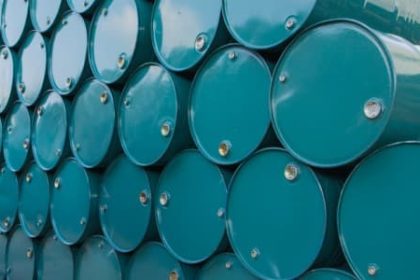
In its April 2026 World Economic Outlook, the Bretton Woods institution has predicted that global GDP will expand by 3.1% in the current year, down from its earlier projection of 3.4%, if the conflict is short-lived and oil prices soon normalize to around $82 per barrel.
However, the IMF says the economy might expand by 2.5% if the tensions linger for long and oil prices average $100/barrel throughout the year, and only grow by 2.0% in case of deepening hostilities and infrastructure damage, putting the world on the edge of a recession.
The outlook for the leading global economies is mixed.
The IMF sees the U.S. economy as resilient and has predicted it will grow by 2.3% in 2026, buoyed by AI investment and recent tax cuts.
Massive investment in artificial intelligence (AI), including data centers and advanced chips, is fundamentally restructuring the U.S. economy and acting as a primary growth engine.
Big Tech firms and hyperscalers like Google, Meta, Microsoft, Amazon, and leading semiconductor chipmakers are investing hundreds of billions annually in AI infrastructure.
Data center construction is similarly experiencing an unprecedented boom, with AI data center power demand in the U.S. projected to grow more than thirtyfold by 2035.
These secular trends are driving a massive influx of capital, with AI-related investments expected to drive nearly 40% of GDP growth.
In contrast, China’s growth forecast has been slashed to 4.4% in 2026 and 4.0% in 2027 due to higher energy costs and a depressed housing sector.
Sustained high oil prices and increased shipping costs through the Strait of Hormuz are driving up the cost of raw materials and logistics for Chinese factories. Petrochemical and manufacturing industries are experiencing higher operating costs, operational disruptions and a slowdown in production.
Higher energy costs tend to be difficult for Chinese firms to pass on to consumers, which is expected to narrow China’s trade surplus and weaken export competitiveness.
However, China is not entirely helpless, with its large strategic petroleum reserves, strong government fiscal control, and aggressive, accelerated development of renewable energy acting as buffers and somewhat limiting the impact of the oil shock.
India is a rare bright spot with growth upgraded marginally to 6.5% from 6.4%, reflecting strong economic resilience and momentum.
The IMF notes that a significant reduction in additional US tariffs on Indian goods has lowered export costs.
Following negotiations between President Trump and Prime Minister Modi, tariffs on many Indian goods were slashed from up to 50% down to 18%.
Key beneficiaries of lower tariffs include gems, jewelry, textiles, pharmaceuticals, and electronics, with some items like specific diamonds and handicrafts achieving 0% duty access.
Strong carryover momentum from high growth in 2025 (forecasts of as high as 7.4%), robust domestic consumption, and consistent investment momentum are also expected to provide a buffer against external shocks.
Domestic consumption remains a primary growth engine in India, driven by a revival in rural demand and steady urban spending.
Retail automobile sales and festive demand have bolstered this sector, with further support expected from potential income tax relief.
India’s manufacturing sector is also expanding, supported by Production Linked Incentive (PLI) schemes.
The services sector, including finance and IT, continue to be a strong growth driver, contributing to both GDP and export resilience.
Meanwhile, government capital expenditure (capex) remains high, particularly in infrastructure, while private investment is showing signs of revival.
The IMF has cut the Eurozone growth forecast by 0.2 points to 1.1%, mainly due to high energy dependence.
Europe’s energy import dependency remains a critical vulnerability, with nearly 60% of the European Union’s energy needs met by net imports, leaving it highly susceptible to price shocks.
Despite significant shifts away from Russian supplies, this reliance on foreign energy has repeatedly driven significant price volatility.
While European gas consumption fell by 20% between 2021 and 2024, the EU still imports approximately 70% of its gas.
The conflict in the Middle East has triggered a more than 70% jump in Europe’s gas prices, weighing heavily on industrial sectors.
Finally, the International Monetary Fund has sharply lowered its 2026 growth forecast for Saudi Arabia to 3.1% from the 4.5% projection issued in January 2026, while the forecast for the Middle East and North Africa (MENA) region was cut by 2.8 points to 1.1%, mainly due to disruption in oil exports through the Strait of Hormuz.
Iranian attacks have targeted major facilities like the Manifa oilfield and the East-West Pipeline, cutting production capacity by at least 600,000 bpd and creating widespread instability across the Kingdom’s energy sector.
Overall, the Iran war is projected to cost GCC nations up to $200 billion in economic growth in the current year, with potential GDP contractions for some of the region’s economies.